





March for Life will hold its annual pro-life march on Capitol Hill next week, bringing awareness to abortion with the largest demonstration for human rights. The event comes at a time when abortion is a hot topic following conservative pushback to President Donald Trump’s comments regarding flexibility toward the Hyde Amendment.
Recent data released from the Kaiser Family Foundation also shows that, with information collected in the first six months of 2025, the abortion rate averaged to 98,630 per month. In half a year, over half a million abortions were performed. The study largely attributes this surge to the growth of telehealth abortions, lower costs of abortion pills, and shield laws protecting abortion providers.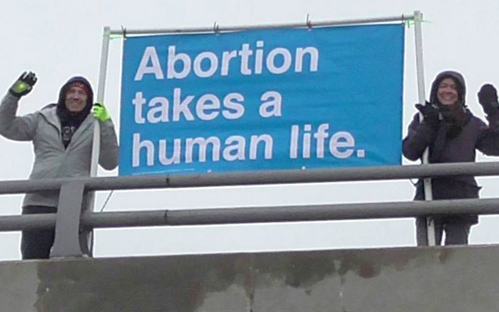
Dr. Albert Mohler, president of The Southern Baptist Theological Seminary, spoke with Tony Perkins on Washington Watch. He says the deep roots that Republicans have in the pro-life fight started after the Roe v. Wade decision in 1973.
“It caught us by surprise, and it caught evangelicals in a very awkward position. As a matter of fact, many evangelicals had not thought the issue through, and so they had to think fast,” informs Mohler. “In the period from 1973 until 1980, you've got a consolidating pro-life understanding.”
He says that during this time the Republican Party became well identified with the pro-life cause. President Ronald Reagan wrote a book about the issue.
At the same time, it became very clear that the two big political parties were heading in different directions. Mohler continues by saying that there is a clear distinction on the issue of life, making what happened next very interesting.
“Congressman Henry Hyde, along with others, took the lead in coming up with a measure that, at the very least, would prevent American taxpayers from paying for abortion with taxpayer money. It was really initiated in 1976 and had to go through several political battles, but by 1980, it was pretty much in shape. It passed with vast bipartisan support,” Mohler said.

Even when Democrats became increasingly known as the pro-abortion party, those such as Joe Biden voted for the amendment, Mohler said.
Critics say that this is because the Hyde Amendment was a common ground on the abortion issue. People could admit that they did not agree with each other on abortion, but they could also agree that one should not be forced to participate.
Therefore, Trump’s comment on Republicans being “flexible” raised a red flag among many pro-life advocates, especially at a time where Democrats are becoming more radical about abortion.
“The fact is that even Joe Biden, until a political gun was put to his head in terms of gaining the nomination for the 2000s race, had voted for the Hyde Amendment every single time it had come up,” says Mohler. “You're exactly right to point to President Trump's comment when he said that Republicans have to be flexible on this. We can be flexible on many things, but on this issue, there's no flexibility.”
What the president doesn’t know
Critics believe that Trump only showed that he does not understand the history of the pro-life battle nor how hard the fight has been. Mohler agrees, saying that it reveals the president’s naivete to the importance of principle in the pro-life defense.
“So much of politics is just purely transactional, and if we're talking about marginal tax rates or zoning laws, any number of things, there can be flexibility. But when it comes to the difference between life and death, we've got no ground to be flexible,” states Mohler.
Mohler believes that, if the Trump administration backs off Hyde, Republicans will lose their pro-life credibility for a generation. Some think that, in that case, the party will become a minority.
“The moment pro-life Christians understand that the Republican Party is backing off this issue, you're going to discover an awful lot of missing bumper stickers and an awful lot of missing voters by the millions,” states Mohler.
As for himself, Mohler states that his first commitment is to the sanctity of human life, and he will stand by the Republican Party as long as the party stands for that. He points out that Trump is a businessman who understands how to make a deal, but he also understands a deal breaker.
“We have to make very clear that this is a deal breaker, that the affection that conservative pro-lifers have for the Trump administration is actually dependent upon his holding the line on the Hyde Amendment,” says Mohler.
He recalls the pro-life battle during the 80’s, when evangelicals had to fight even against the Reagan administration. He states that politics “means eternal vigilance on the issues that are unshakable and unnegotiable.” Furthermore, he fears for the future of conservatism when the conservative base only speaks truth to their opposition and not each other.
“We're only consistent if we speak the truth to our side and to our tribe and make it stick. If we are about principle, which we are, then we've got to live by that principle. And you know what? We've got to say out loud where the lines are,” says Mohler.
Despite the error in Trump’s comment, Mohler does credit Trump with taking “incredibly bold and impressive action” in favor of the pro-life agenda during his second term. White House Press Secretary Karoline Leavitt was quick to point to Trump’s previous executive order, that protects the Hyde Amendment, after he made his ill-placed comments.
“He needs to hold by these very actions he's taken. He's actually taken some very constructive actions related to Hyde Amendment and to federal funding issues related to abortion,” states Mohler.

However, despite efforts to stop federal funding of abortion, chemical abortion pills still run rampant in many pro-life states. As Mohler puts it, the victory that followed the Dobbs court case in 2022 is subverted and undone through postal deliveries of the abortion pill.
“What a sad, tragic irony that we would win at the Supreme Court and lose at the mailbox. To think that it comes down to a pill, the culture of death in a pill. Americans need to be infuriated and outraged about this,” says Mohler.
The ease of abortion
Congressman Marlin Stutzman (R-IL) also spoke on Washington Watch to address the fact that the abortion industry will not stop. The pill, he thinks, makes it easier in many cases.
“We're seeing now more babies being murdered because of the abortion pill than what we've seen in the past. People just take a pill, and that's it,” says Stutzman. “We need to address this from a standpoint of ethics and the character of our country, that this is something that we're not going to allow.”
Critics point out, and Stutzman agrees, how both the Trump administration and the Food and Drug Administration (FDA) can change overnight if they wanted.
“The FDA can move, and since President Trump is so willing to do executive orders, the administration can move. We can do these things in the House and in the Senate. It's much more difficult, but at least the precedent could be set through the administration,” states Stutzman.
He thinks that it is important for those in the pro-life and conservative movement, whether in Congress or in partnerships or coalitions, to address this.
“I hope that that's the message that is sent. We want to be partners with the administration when it comes to pro-life policy,” says Stutzman.


